

Testing laboratory
PMI: positive material identification
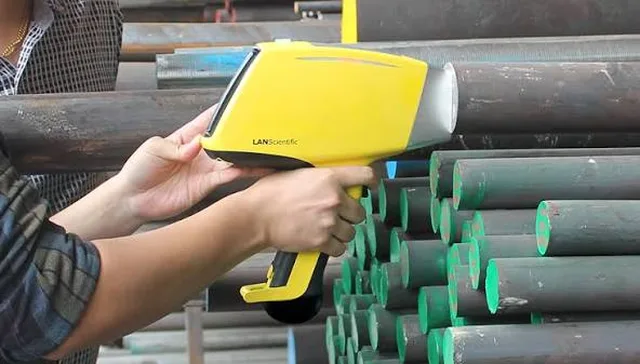
PMI confirms, part by part, that the material is the right alloy. It measures the main elements (Cr, Ni, Mo, Cu, Ti, Nb…) and compares them with the standard, without cutting or damaging the part.
What we do
- Alloy check on receipt of imported material
- PMI of finished parts before shipment
- Sorting of mixed or unidentified material
- Result recorded on the certificate or in a report
Materials
Send the standard, the test and the number of specimens: we reply with the laboratory scope. See alloys in stock.
How PMI works
PMI (Positive Material Identification) measures the main alloying elements directly on the part, with handheld equipment, and compares the result with the range of the standard. The measurement takes seconds, requires no cutting or coupon and can be repeated on every part in the lot.
When to use it
PMI is used on receipt of imported material, to confirm that the bar or forging is the alloy on the certificate; before shipment of finished parts, to ensure no part was swapped; and when sorting mixed or unidentified material. In refineries and chemical plants, standards such as API RP 578 recommend PMI on critical alloy components.
Limits of the test
PMI identifies the alloy by its main elements (chromium, nickel, molybdenum, copper, titanium, niobium, among others), but does not replace a complete chemical analysis. Carbon, for example, is not measured by most handheld instruments, so it cannot by itself distinguish a 316 from a 316L: that difference comes from the mill certificate or from laboratory analysis.
What to send with a quote request
Send the expected alloy, the number of parts and whether the result must appear on the certificate or in a separate report.
More in testing laboratory
Frequently asked questions
Does PMI replace the chemical analysis on the certificate?
No. PMI confirms the alloy on the part and prevents material mix-ups; the complete chemical analysis, including carbon, comes from the mill certificate or from laboratory testing.
Does PMI distinguish 316 from 316L?
On most handheld instruments, no, because the difference lies in the carbon content, which these instruments do not measure. PMI confirms it is a 316 (chromium, nickel and molybdenum); the low carbon of 316L comes from the mill certificate.
Does Dustre perform this service on customer-supplied material?
Yes, as long as the alloy and the specification are defined. We can also supply the material from our stock, with EN 10204 3.1 certificate.